The Ethology of the Most “Touching” of Dog/Human Communication
A woof of a welcome to our IN-DOG-URAL post of Nose to the Ground. Our PAW-PIC is the exploration into the ethology (canine evolution) of “Shake a Paw” or “Give a Paw,” which many consider to be the most “touching’ form of communication between dogs and humans.
First, a general overview of what ethologists refer to as Evolutionary Continuity of Dogs. The principle of evolutionary continuity states that all animal capacities and behaviors exist—with variations in degree—in continuity with other species . . . in our case, human, and dog. Simply speaking, among the infinite interspecies relationships known to humanity, the one between our two species is, paws down, the most singular, special, and soulful connection existing on Earth. Just sayin’.
Humanity’s Best Friend, our modern dog Canis lupus familiaris, traces its lineage from ancient wolves. Ten to twenty-thousand years ago, genetic divergence from the wolf informs our understanding of just how remarkable modern dogs are, as it pertains to some doggone amazing adaptations! Beginning with the early “proto-dogs,” scientific evidence offers two theories explaining the development of this extraordinary human/dog bond:
Self-domestication: Less timid wolves may have scavenged near human settlements— perhaps the origin of the expression “throw me a bone.” (Okay, there is no etymological evidence to support this claim.) These furtive appearances supplied them with leftover food, thus promoting a more gradual tolerance of human presence. This “getting-to-know-you” phase was symbiotic for humans as well. Their four-legged companions could join them on hunting expeditions, helping by locating, even cornering, prey. Also, in the evening and early morning hours, the village dogs could guard humans from becoming prey themselves! This transition was the foundation for further social selection, where less aggressive and more altruistic wolves got a good deal: a warm fire, a full belly, and maybe even as long ago as then, in return, offered up the earliest give a paws, cuddles, and affection to their two-legged pals.
Or . . .
Pup Adoption: Thousands of years before the first animal shelters, early humans understood the advantages of raising abandoned Canis lupus pups. Unlike the grown dogs who initially would enter the village with trepidation, these pups were immediately dependent on the villagers. Safety, socialization, food, water, and even play was an uptick in the intensity of the dog/human bond.
The gray wolf (Canis lupus) emerged during the Pleistocene Epoch, aka the Ice Age. More specifically, the lineage is traced back to the Early Pleistocene Canis etruscus, and eventually the Middle Pleistocene Canis mosbachensis. The earliest modern gray wolves date back approximately 400,000 years ago within the Middle Pleistocene, while other studies suggest their presence as early as 1 million years ago.
For the village dog, survival of the fittest began to matter little, or not at all. This branch of the Canis lupus family tree was on the path to becoming unrecognizable.
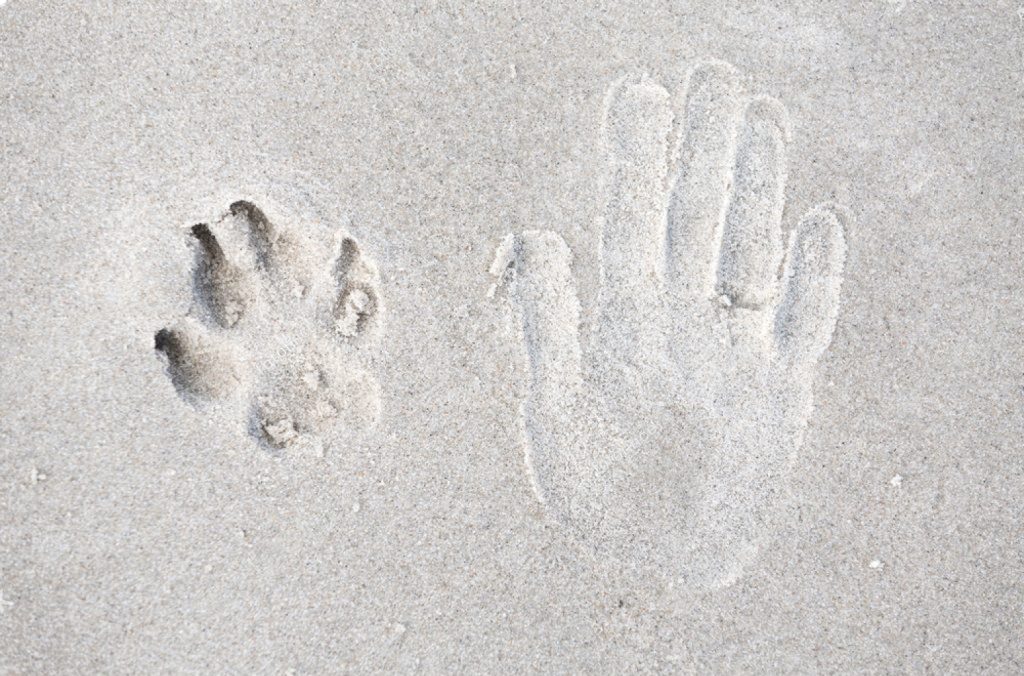
Okay, then, what are the reasons dogs offer their paw to human hand? Can this heartfelt gesture have its roots 200-400 centuries ago? How could it not?
First, how about a quick quiz? Reorder these reasons pups proffer a paw from most to least likely (the answer is located at the end of the post):
Why do dogs give a paw? Were you correct with your ordering of reasons? This literally goes to the “heart” of the matter. Dogs express emotions, but do not have feelings. What does that mean? If we “loosely” compare a dog’s cognitive functioning to a three-year old child, most dogs would take issue! But such is the science attributed to a dog’s brain. But canines are genius three-year-olds. However, dogs do not have feelings. Research suggests that to be in the “state” of feeling, a living being must be able to cognitively identify what is being felt, usually through spoken or written language. Typically, this requires help from the pre-frontal cortex. It is a slight difference, but an important one. For example, consider your dog as “expressing the emotion of boredom” as opposed to my dog is “feeling bored.” He or she is not going to take out a sheet of paper and write down “I feel bored.” Additionally, of the four choices, here we get a further sense of the 20,000 years of unprecedented connection. When that paw is in your hand, and your “eye” meets your dog’s (fun fact: dogs look only at our left eye, as that is where our empathy center is communicated non-verbally—they can skip the right eye’s logical/mathematical and reasoning functions!), you are speaking dog in a way that is not behavioristic, biological, or medical.
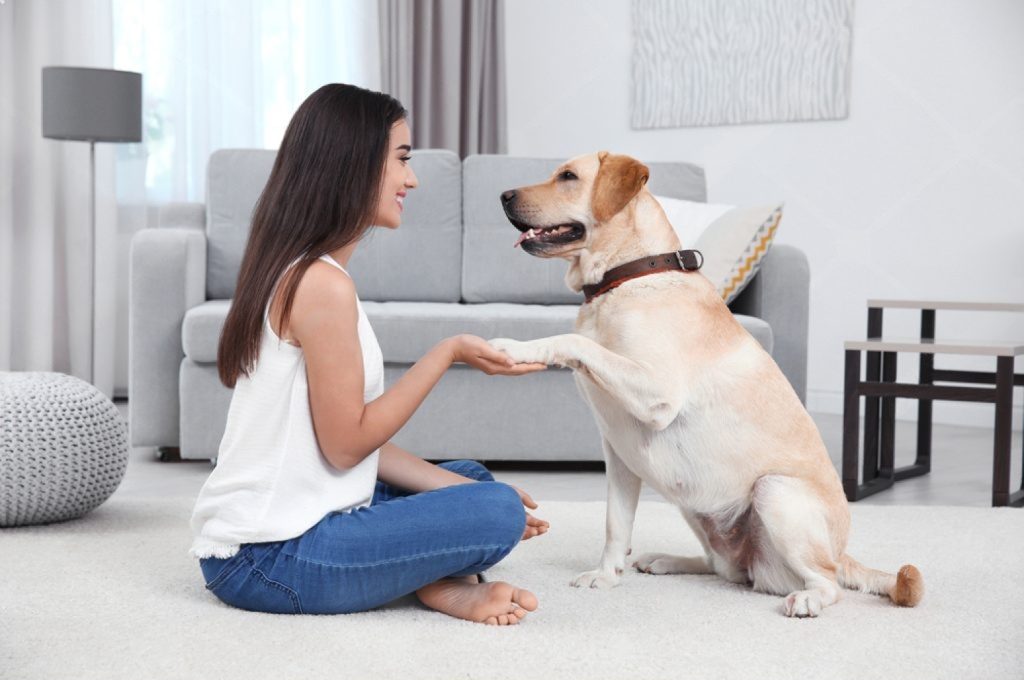
All things being equal, dogs are avid learners. The second-most likely reason is “trained to shake.” The “Shake” cue is easy to teach, easy to learn, and is perfect for classical conditioning (an automatic, conditioned response that becomes associated with a specific stimulus) or in English, being rewarded in a specific moment for doing what is asked. Dogs love routine. If your dog did not learn this with littermates or early human socializers, you have an opportunity to augment learned foundational skills, such as sit, down, wait, come, stay, and touch. There are countless social media links and website trainers where you can add this to your dog’s repertoire. We like Happy Hounds.
Most breeds use their paws to communicate. If it isn’t “I love you” or “I am giving you a paw because you are holding out a flat palm,” then it indicates that your dog wants something.
Trained well, these Shakes can be harmonious, adorable, clever, and the like. On the other paw, if dogs go overboard with the pawing to “get what they want,” this should be addressed by revisiting a tried-and-true redirection (for example, “Go to place”) or a simple management approach (for example, standing up and busying yourself with anything that looks boring to a dog).
What is most important here is being able to read the furry offering through a medical lens: Is my pup not feeling well. That is our fourth option, and the research suggests dogs do not always let us know that they are unwell. It is our job to notice. And if it is by way of repetitive pawing, look deep into the dog’s eyes, read the body language to get more context, and follow your intuition. One of the most critical relationships a pet parent will ever have is their veterinarian and clinic staff.
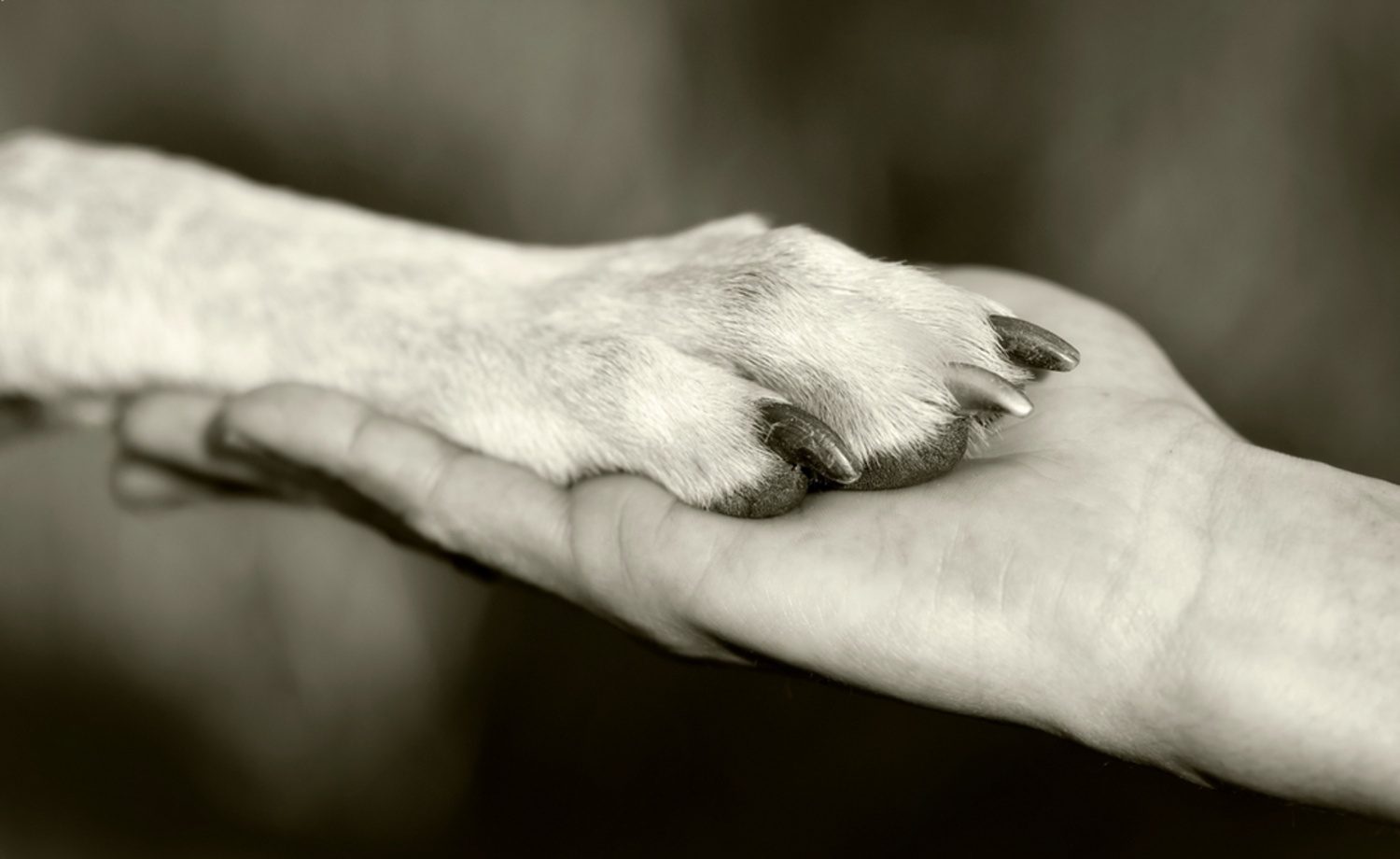
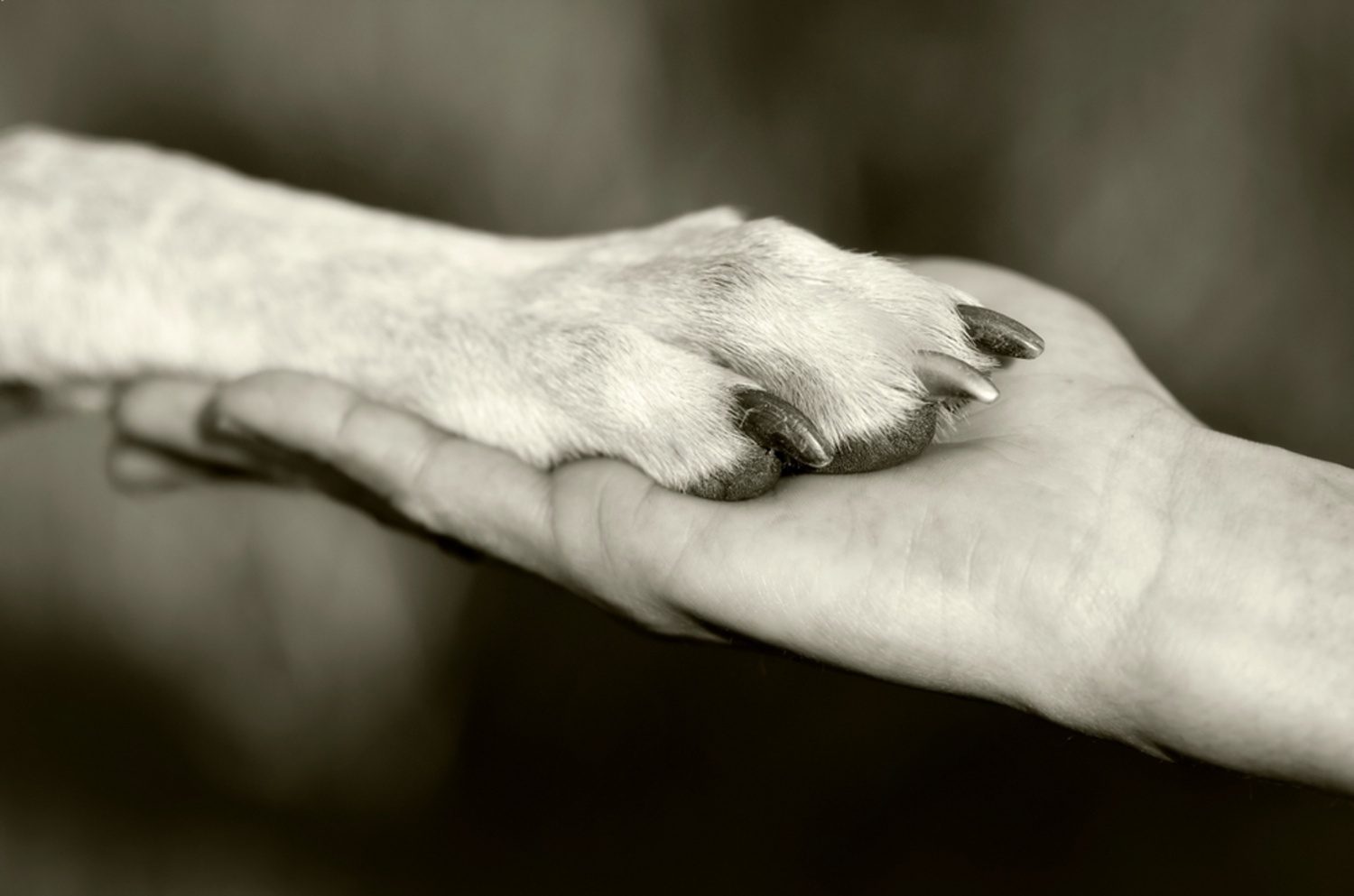
When I hold a dog’s gently-placed paw in my open palm, I am reminded of the power of timeless moments. There is the softness of the fur, the delightful poetry of the clipped and buffed nails, the porous pads calling out to be tickled, and as we orchestrate the ethological exchange, I am carried back to a misty mountain village where wolves once howled at the moon, and I am left to wonder, where would we all be if those first few gray wolves had not ventured into our settlement for a few leftover scraps.
1. Your dog is expressing emotion
2. Your dog is trained to shake
3. Your dog wants something
4. Your dog is not feeling well
 Bone-Deep